
'If you question the police you become an anti-national and that is ridiculous.' 'Either you say we live by the Constitution or you say the State will not follow the Constitution.'

In the light of the efforts being made to forge electoral unity between scheduled castes and Muslims, Mohammad Sajjad examines what the architect of our Constitution, B R Ambedkar, had to say about the Muslim community.

Keen to scrap the collegium system, government on Monday introduced a Constitution Amendment Bill in Lok Sabha to establish a six-member body for appointment of judges to the Supreme Court and the high courts.

'Trump's desecration of all that Obama represented can be seen at different levels: Personal, political, systemic and structural,' explains Ambassador B S Prakash.

'The main ploy of the BJP's pre-poll proclamations on corruption was so cacophonous and resounding that it unexpectedly worked out to its greatest advantage. But there seems to be a lull after the sound and fury over corruption,' says Ram Ugrah.
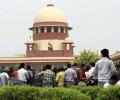
Commissions of inquiry are potentially powerful instruments to fix responsibility on public functionaries, but everything possible has been done to blunt this instrument, says Dr Madhav Godbole, retired Union home secretary.

'I would say it is not going to be days and weeks. It is going to be months and years, over which we would make an assessment on the decisions taken by the Parliament at this point of time. 'We are in for a long haul is what I would say.' It was a very diverse India, which was coming together, politically, in a very cohesive, democratically-resilient way." Professor Navnita Behera examines the wisdom of the exit of Article 370 in Jammu and Kashmir.

The Opposition National Conference and Congress lawmakers on Friday disrupted proceedings in both houses of the Jammu and Kashmir legislature, accusing the government of misleading people on the issue of transfer of power projects to the state, and created ruckus in the assembly as Speaker directed marshalling out of some members.

Criticising various provisions in the proposed GST regime, Moily said it will be a "technological nightmare" and the anti-profiteering provisions in it are "far too draconian."
.jpg)
India's fear of small states derives from memories of Partition and the paranoid view that it will break up under 'too many' states. It's time to shed such fears and bite the 'states' reorganisation' bullet. India won't crumble under a few more Telanganas, Vidarbhas or Gorkhalands, says Praful Bidwai.

Successors of those who migrated to Pakistan and China during Partition will have no claim over the properties left behind in India, with Parliament on Tuesday passing a bill to amend a 49-year-old law.

Shankar Acharya gives ten predictions on key politico-economic developments in the world and ten for India.

Dr Behera speaks about how the nationwide positive reaction to the abrogation of Article 370 in Jammu and Kashmir indicates that the very idea of India is changing. From a diverse, multicultural entity, could India be becoming a place where assimilation is more important than accommodation?

Claude Arpi gives a fascinating firsthand account of the Dalai Lama's arrival in Tawang in March 1959 and explains why he will once again receive a grand welcome, whether Beijing likes it or not.

'The consolation is that in recent years, the focus at the time of the anniversary has been increasingly shifting from Indira Gandhi's assassination to the plight of the thousands of innocent Sikhs who had been killed in retaliation,' Manoj Mitta, co-author of When a Tree Shook Delhi: The 1984 Carnage and its Aftermath, tells Prasanna D Zore/Rediff.com.

Hindu-American Congresswon Tulsi Gabbard coasts to a rollicking re-election victory in in Hawaii's 2nd District
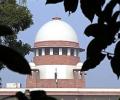
'Disturbingly, the dissenting judgment of the Supreme Court has raised doubts whether religion, race, caste, community, language etc can be separated from politics at all. It has rightly underlined that this question should to be addressed by Parliament rather than the Supreme Court,' says Dr Madhav Godbole, the former Union home secretary.

'Foreign policy-making cannot be shifted out of Delhi and the regional satraps, who do not have a national perspective, should not be allowed to dominate foreign policy. But regional inputs should be integral to foreign policy-making at every step of the way,' says Ambassador T P Sreenivasan.

'Where have we failed, as parents, teachers and leaders, that our children have forgotten all tenets of decent behaviour and respect for women?' President Pranab Mukherjee asks the nation on the eve of Republic Day.

Pranab Mukherjee's book The Dramatic Decade: The Indira Gandhi Years takes the readers through the economic and social unrest of the period leading up to the emergency, rise and fall of leaders, many splits within the Congress, while promising to offer more in the next two volumes of the trilogy, says Nivedita Mookerji.

The battle against militants fighting for separation of China's volatile Xinjiang province, bordering PoK and Afghanistan, is getting "tougher, fiercer and crueler than ever" due to the revival of pan-Islamic extremist groups, top Chinese leaders from the province said.

'In her insecurity, she destroyed the institutions of democracy.' 'She packed Parliament with her supporters with loyalty being more important than ability; she superseded judges; she corrupted the civil service.' 'She knew how to use people against each other and was quite a master of that.' 'She would do this with calculated skill and in the bargain cause enmity between brothers, split up families.'
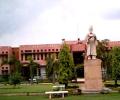
Attorney General Mukul Rohatgi's stand that AMU is not a minority university reveals the anti-minority stand of the political party now in power, says Mohammad Sajjad, outlining the long history behind one of India's premier universities.

'My question is not why he has accepted the governorship, my question is why did the government offer it to him? By his accepting it, an impression is sought to be created that judges are no better than anyone else and will accept anything.' Fali Nariman, the legendary lawyer, speaks on the controversy over the National Judicial Appointments Bill and former Chief Jusice P Sathasivam's appointment as Kerala governor in an exclusive interview.

'What the Supreme Court decision does is encourage more and more young Indians to get involved in citizenship and democracy and do so more fearlessly.' 'Obviously, this is not a licence to be rude or go defaming people or be obnoxious online or do illegal activities online.' 'But this is a licence and green light for people to get more involved in the country, its politics and governance, its businesses, and be freely expressing your views on it.'

Read the full transcript of President Obama's State of the Union address on Wednesday at the US Capitol in Washington.
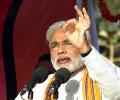
The kind of people Narendra Modi has chosen, the decisions he has taken and the rail and central budgets suggests that he is treading carefully in New Delhi. There is less of innovation and more of continuity, so far. He is not ready to rock the boat and start from scratch, says Sheela Bhatt.

'In the first meeting of this new year, we took a joint new year resolution that we will complete it this year. At the time things were not very clear, but the mood was clear that yes, we must resolve it.' 'Yes, details have to come out, but there are some sensitivities, there are some stake-holders not yet on board, especially other Naga undergrounds etc, we would like them to come on board... So at a proper time it has to be revealed to the country, and to the legislature. Perhaps, we may have to wait for some more time.' 'With better understanding of the Indian system, many of them have learnt, realised, appreciated that Naga nationalist aspirations can be accommodated in the Indian system. The Indian system is pretty comprehensive and flexible.' 'A Naga has as much stake, claim over India as any other Indian. There is no distinction. This, Nagas have realised, that yes, Naga nationalist aspirations and Indian nationalism are not mutually exclusive.' Ravindra Narayan Ravi, the Government of India's Special Interlocutor for the Naga talks, explains how the Naga Peace Accord was reached in an exclusive interview to Saisuresh Sivaswamy/Rediff.com

'In her insecurity, she destroyed the institutions of democracy,' says Khushwant Singh.
